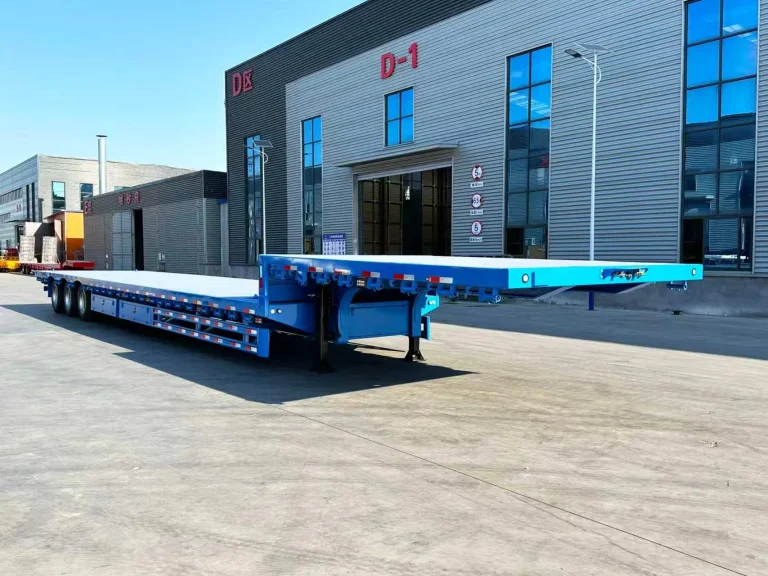
Düz Yüzeyli Römork Boyutları: Alıcılar İçin Kanıtlanmış 7 Kontrol Noktası
18 Ağustos 2026
CHENLU Mühendislik Ekibi | Trailer Engineering and Export Support | Updated August 18, 2026
Flatbed trailer dimensions must match the cargo envelope, container size, tractor geometry and destination rules. A nominal deck length is only a starting point: usable deck space, outside width, deck height, axle spacing, twist-lock position and loading clearance determine whether a specification works on the road and at the jobsite.
Flatbed trailer dimensions should be approved against the cargo, tractor and route.
Flatbed trailer dimensions at a glance
CHENLU’s public catalogue shows flatbed semi trailer configurations with three, four and five axles. Forty-foot models are displayed for container and general-cargo work, and a 60-ton model is also shown. These catalogue references describe available structures, not a universal size for every export market.
Dimension or configuration
Neleri teyit etmek gerekir?
Why it affects procurement
Toplam uzunluk
Foremost to rearmost fixed point, including bumpers and optional equipment
Controls turning path, total combination length and permit needs
Usable deck length
Clear cargo-supporting length between headboard, locks and rear structure
Determines whether containers, coils or timber fit without unsafe overhang
Overall and clear width
Outside envelope and loading width between side structures
Separates legal width from the space available for cargo and securing
Güverte yüksekliği
Unladen and loaded height, including tires, suspension and deck steel
Changes centre of gravity, bridge clearance and loading access
Axle layout
Axle count, spacing, suspension and rated load
Affects axle loads, turning behaviour, tire wear and local compliance
Container locks
Lock type and positions for the required ISO container combination
Prevents a deck that is long enough but cannot secure the intended containers
Which flatbed dimensions belong on the approval drawing?
A buyer should request one dimensioned drawing that shows the trailer, cargo position and tractor interface. The drawing should use consistent units and identify whether each measurement is taken loaded or unloaded.
Overall envelope: Record total length, outside width, deck height, rear overhang and ground clearance.
Usable deck: Mark the clear length and width available after headboard, side rails, locks, toolboxes and other fixed equipment.
Loading reference points: Show container-lock centres, coil supports, lashing points, ramps or crane access zones.
Running gear: Identify kingpin position, axle spacing, suspension type, tire size and the rated axle loads.
Tractor connection: Include fifth-wheel height, coupling clearance, swing radius and the expected kingpin load.
“Forty-foot flatbed” normally describes the cargo or deck category, not the exact overall trailer length. The front structure, kingpin area, rear bumper and equipment can extend beyond the nominal cargo length.
Container flatbed dimensions
Container work starts with the exact combination the fleet must carry. State whether the requirement is one 20-foot container, one 40-foot container, a 20/40 combination or a 45-foot container. Confirm the container gross mass and centre of gravity as well as the lock positions.
CHENLU publicly shows flatbed models for 20-, 40- and 45-foot containers. The selected layout still needs a load-distribution review because container length alone does not establish kingpin load, axle load or permitted rear projection. Buyers can compare the CHENLU flatbed trailer buying guide with the drawing for the intended model.
Lock placement should be checked with the actual container corner castings. A deck may have enough clear length yet place a lock outside the container’s load path. Ask for the lock spacing, lock height and any movable-lock option on the approval drawing.
General cargo, steel and timber: sizing beyond the deck
Flatbeds are also used for steel coils, timber, palletized cargo and irregular loads. For these jobs, the deck dimensions are only one part of the cargo envelope.
Steel coils: Confirm coil diameter, width, mass, cradle or well requirements and the allowed lashing method. A coil that fits the deck can still overload one axle group.
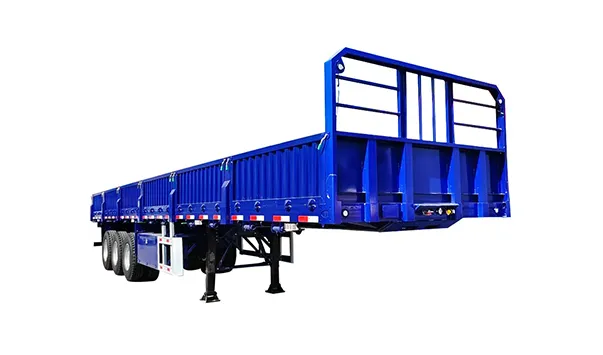
Timber: Record bundle length, height, moisture-related mass variation and side-restraint requirements. Fence or sidewall options may be more suitable when the load needs lateral containment.
Palletized cargo: Map forklift access, pallet footprints, loading order and the clear width between structures. Check whether the deck floor and lashing points match the handling equipment.
Compared with a generic flatbed listing that gives only length and width, a project specification should include cargo mass distribution, securing points, deck thickness, side structure and the complete tractor combination.
Axle choice changes the usable specification
CHENLU displays three-, four- and five-axle flatbed configurations. Axle count is not a simple payload upgrade. It changes axle spacing, frame loads, turning behaviour, tire count, maintenance and the rules that apply in the destination market.
Provide the intended gross combination mass, cargo centre of gravity, tractor rear-axle arrangement and route limits. The factory can then check kingpin load, axle-group load, suspension capacity, braking equipment and tire ratings together. A longer deck with a different axle position may change the load distribution even when the cargo weight stays the same.
Deck height, width and loading access
Overall width and usable loading width should always be listed separately. Side rails, stake pockets, wheel guards and other structures can reduce clear space. If the cargo is wider than the legal envelope, the buyer may need an oversize permit, route survey and escort plan.
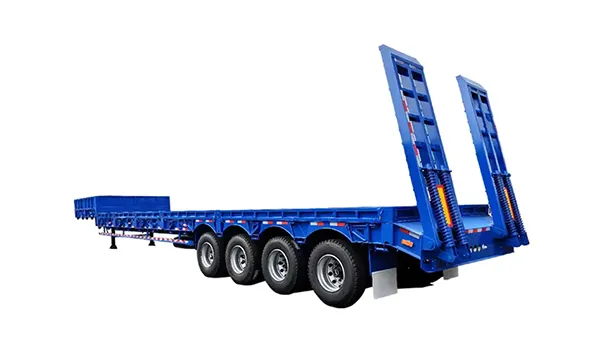
Deck height affects more than bridge clearance. It changes the ramp angle for forklifts, the centre of gravity of tall cargo and the total height of a container or machinery load. Confirm loaded deck height using the selected tires and suspension, not a generic catalogue drawing.
Loading equipment also belongs in the dimension review. Record dock height, crane reach, forklift capacity, side-loading space and the clearance needed to secure the load. A trailer that fits the cargo but cannot be loaded safely is not a workable specification.
Route and compliance checks
Legal limits vary by country, road class and permit category. Check overall combination length, normal width, height, axle load, gross combination weight and projections before production. For international projects, braking, lighting, tires and coupling devices may be subject to market-specific requirements. The UNECE Dünya Araç Yönetmeliklerinin Uyumlaştırılması Forumu provides the WP.29 framework; the exact approval route depends on the destination and configuration.
Do not use an online dimension as proof of compliance. Attach the approved drawing, axle calculation and destination requirements to the order documents so the factory, inspector and carrier are working from the same revision.
Benefits and limits of custom flatbed dimensions
A project-specific deck can improve cargo fit, container flexibility, loading access and load distribution. It can also allow the buyer to select the axle layout, suspension, floor, twist locks and securing equipment for a defined route.
Customization has tradeoffs. A longer or wider deck can reduce route options, increase tare mass or require permits. A non-standard lock position may limit future container combinations. A deck change can also require revisions to the frame, axle spacing, brakes and suspension instead of a simple platform alteration.
Flatbed trailer price and quotation inputs
Selected CHENLU flatbed trailer configurations are publicly listed at approximately USD 8,900 to USD 10,200. This is a reference range for selected configurations, not a fixed offer. Final pricing depends on dimensions, axle quantity, rated load, steel, suspension, tires, braking system, locks, accessories, order quantity, destination and shipping terms.
For a comparable quotation, send the same cargo sheet and drawing requirements to each supplier. Ask each quotation to identify included equipment, destination compliance scope and shipping terms so a lower headline price is not hiding a different specification.
Flatbed trailer dimensions FAQ
How wide is a flatbed semi trailer?
There is no single worldwide width for every flatbed semi trailer. The approval drawing should state overall width and usable loading width for the selected model and destination. A wider cargo or trailer may require permits and route controls.
What is the usual length of a flatbed trailer?
Length depends on the container combination, cargo, axle layout, tractor and local rules. Forty-foot models are publicly shown by CHENLU, but the nominal cargo category is not the same as the complete overall trailer length.
Can one flatbed carry 20-foot and 40-foot containers?
Some configurations are designed for more than one container size, but the lock layout and load distribution must be checked for the exact combination. Confirm corner-lock positions and the permitted mass for each case.
Does adding axles increase legal payload?
Not automatically. Legal payload depends on axle loads, spacing, frame, suspension, brakes, tires, tractor limits and destination regulations. Use a load calculation and compliance review for the selected configuration.
What should I send for a flatbed quotation?
Send cargo dimensions and mass, container sizes, loading method, destination country, route conditions, tractor details, preferred axle arrangement and any required locks, floor or side structures. CHENLU can then prepare an application-specific configuration and drawing.
Request a project drawing
Prepare the cargo envelope, container combination, destination rules, tractor data and loading method before requesting a final quote. Contact CHENLU Trailer with those details to review the required flatbed trailer dimensions and configuration.



 18 Ağustos 2026